
The Luggage Hack Most Travelers Miss
By Bridget | Published: October 2026
The Hidden Side of Travel
When packing for a trip, most of us focus on outfits, chargers, and travel documents. But there is an invisible reality we rarely think about: the moment you leave your driveway, your luggage enters a massive ecosystem of the unknown.
Suitcases sit stacked by the hundreds in hot, humid holding areas at cruise terminals and airport cargo holds. They ride on conveyor belts, get loaded into shuttle buses, and sit on hotel or stateroom carpets where someone else just checked out hours earlier. Those travelers could have arrived from anywhere in the world—and so could whatever hitched a ride with them.
Where I Learned It (The India Business Trip)
Years ago, while preparing for a corporate trip to India, I was sent to a travel medicine clinic specializing in preparing travelers for foreign environments. Expecting basic vaccine schedules and digestive advice, I walked away with one golden rule that permanently changed how I pack: treat your gear with permethrin.
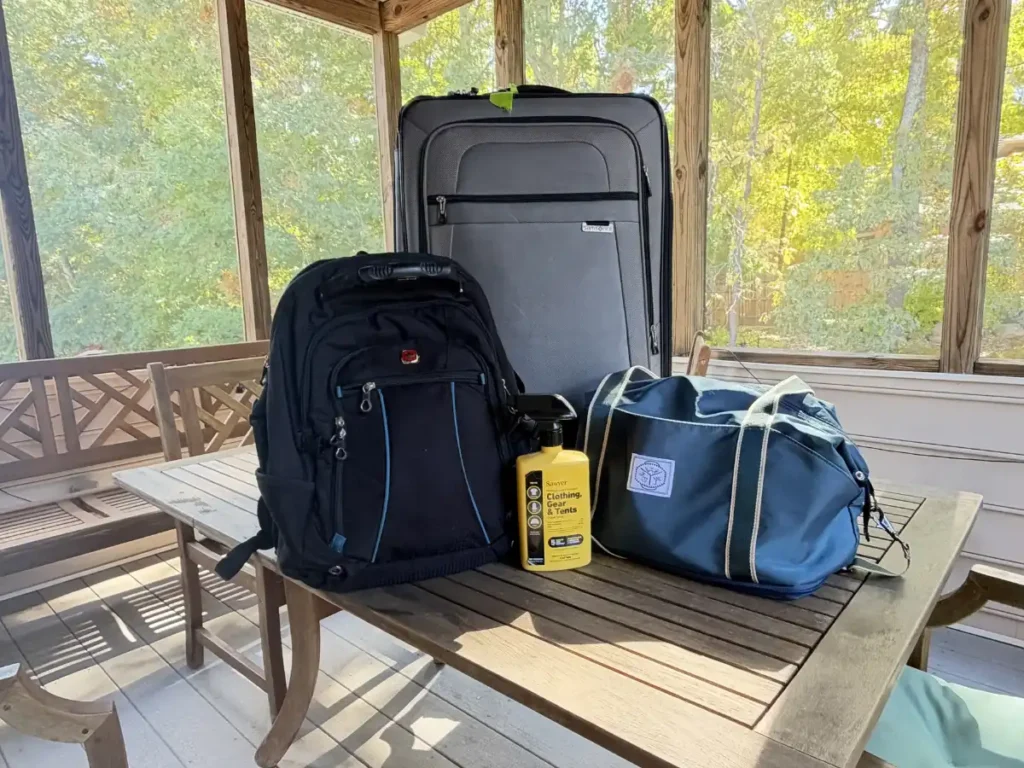
The clinic recommended treating clothing, shoes, packs, and luggage with Sawyer Premium Permethrin Insect Repellent. While my personal preference has always been to skip treating clothing directly against my skin, treating the exterior barriers—suitcases, carry-ons, backpacks, and shoes—became an automatic ritual.
Why This Matters for Cruising, Flights, and Road Trips
- The Turnaround Reality: Cruise staterooms and hotel rooms turn over in a matter of hours. Even in five-star accommodations, pests can travel on luggage, not people.
- Humid Holding Bays: Cruise terminal luggage areas and tarmac baggage carts are prime environments for moisture and insects native to tropical ports.
- Border Crossings: Visiting ports with different climates introduces local pests you definitely don’t want setting up camp in the seams of your weekender bag.
- The Return Journey: Treating your bags before leaving protects you on the journey home, ensuring you don’t accidentally import unwanted hitchhikers into your closet.

Sawyer’s Premium Insect Repellent
Outdoor Gear & Beyond
The exact same logic applies to outdoor adventures. Whether hitting the trails or packing for a weekend camping trip, treating tents, hiking shoes, daypacks, and camp gear keeps ticks, chiggers, and mosquitoes from catching a ride into your car or tent.
Best of all, when it’s time to break down camp, you aren’t packing up any hidden trail pests to unpack later in your closet.

How to Apply It Properly (Step-by-Step)
- Take it outside: Always apply permethrin in an open, well-ventilated outdoor space.
- Spray the exterior thoroughly: Spray suitcases, duffels, and backpacks evenly across outer fabric, seams, zipper tracks, and exterior pockets.
- Focus on high-risk contact points: Don’t forget the bottom base, wheel wells, and handles.
- Let it dry completely: Permethrin must dry fully (typically 2 to 4 hours, depending on humidity) before handling or packing. Once completely dry, it bonds to the fabric fibers, becomes odorless, and won’t rub off onto your clothes inside.
- Set it and forget it: A single treatment lasts through several weeks or multiple trips.
Summary
Our bags go through a lot so we can see the world, from humid port holding bays to high-turnover rooms. Giving your luggage a quick protective shield beforehand is easily the most underrated step in my packing routine. Once you make it part of your departure checklist, you’ll never roll a bare suitcase into a terminal again.